

Suppressor Accessories: What You Need to Get the Most Out of Your Can
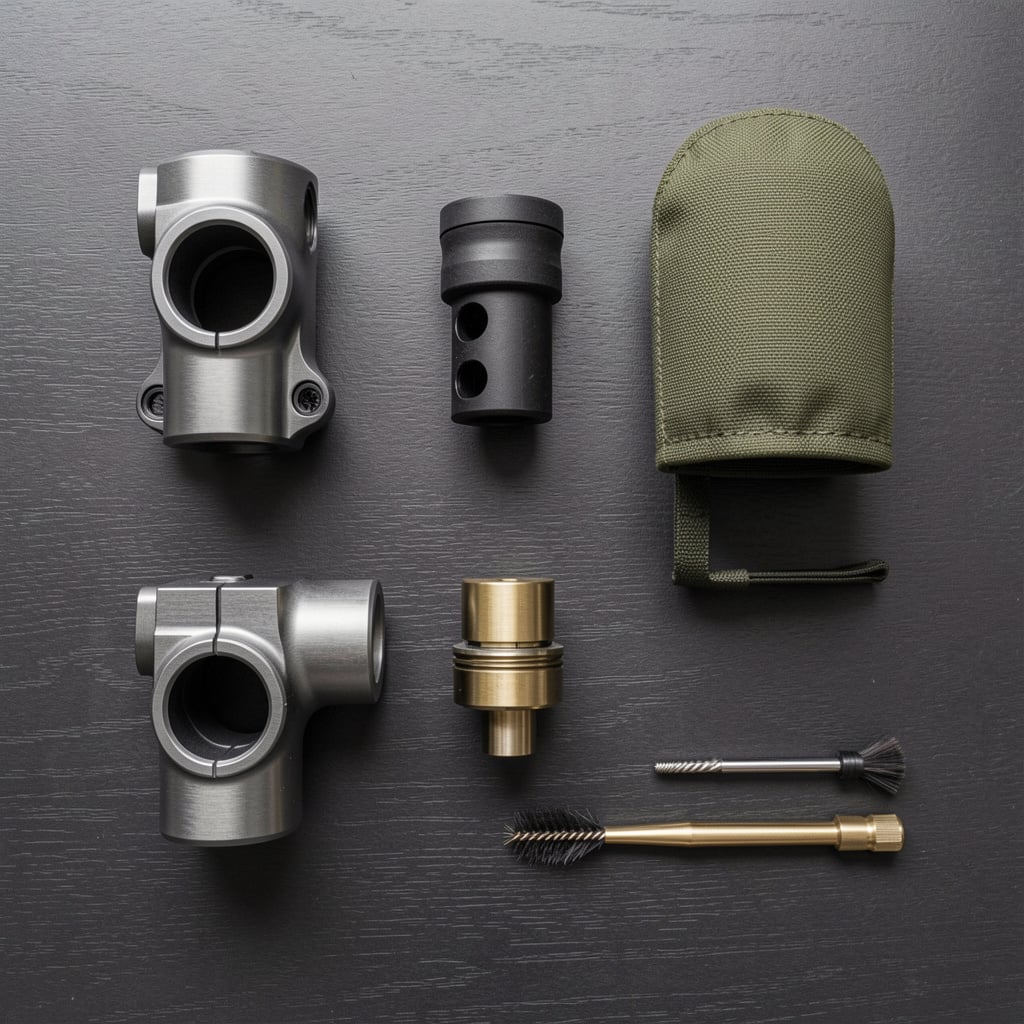
The right suppressor accessories decide whether your can works well or just sits on the end of your barrel. Mounts control how fast you can swap it between guns, covers protect your gear and your sight picture, and the right cleaning tools keep it running clean for years. If you are still deciding whether a suppressor is worth it in the first place, our guide on what a suppressor actually does covers the myths and the real benefits. Here is what actually matters once you own one, and why.
Mounts: how your suppressor attaches
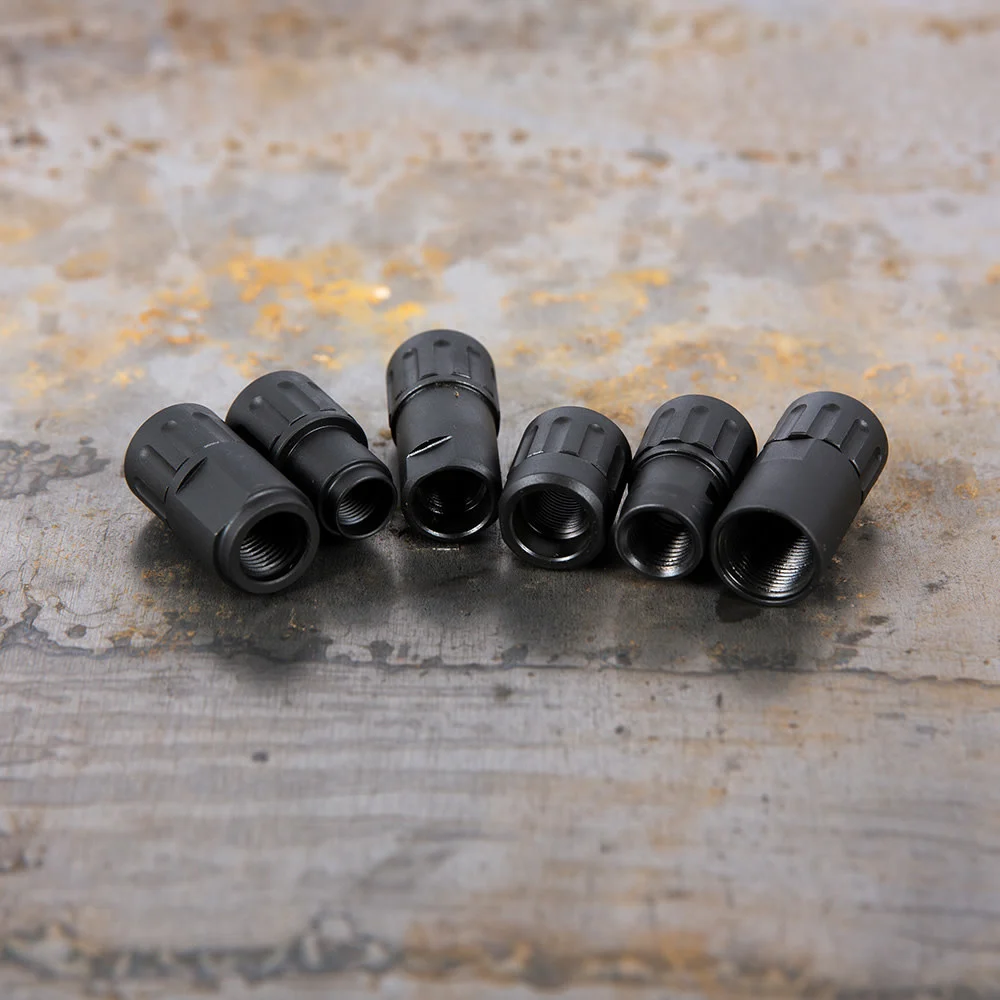
Every suppressor needs a way to attach to your barrel, and the mount you choose affects both cost and convenience. Direct thread mounts screw straight onto a threaded barrel and are the simplest, most affordable option. Quick detach mounts, like SilencerCo's ASR system, let you swap a suppressor between guns in seconds without touching a wrench. For the full breakdown of when each style makes sense, see our direct thread vs QD comparison.
Whichever style you run, the mount has to match both your suppressor and your muzzle device. An ASR Bravo mount pairs with SilencerCo's ASR flash hiders and brakes, while a Xeno adapter needs a Xeno-compatible muzzle device on the host firearm. Mixing brands here is the single most common mistake first-time buyers make, so confirm compatibility before you order.
Muzzle devices and brakes
The muzzle device on your barrel is what your mount actually locks onto, and it does double duty by managing recoil and flash. A 3-port muzzle brake, like SilencerCo's ASR-compatible design, cuts felt recoil noticeably even before the suppressor goes on. If you already run a brake and want a suppressor cover, the SilencerCo Bravo Anchor Brake replaces the front cap on an Omega 300 or Hybrid 46 for a flatter-shooting setup.
Suppressor covers: heat, mirage, and gear protection
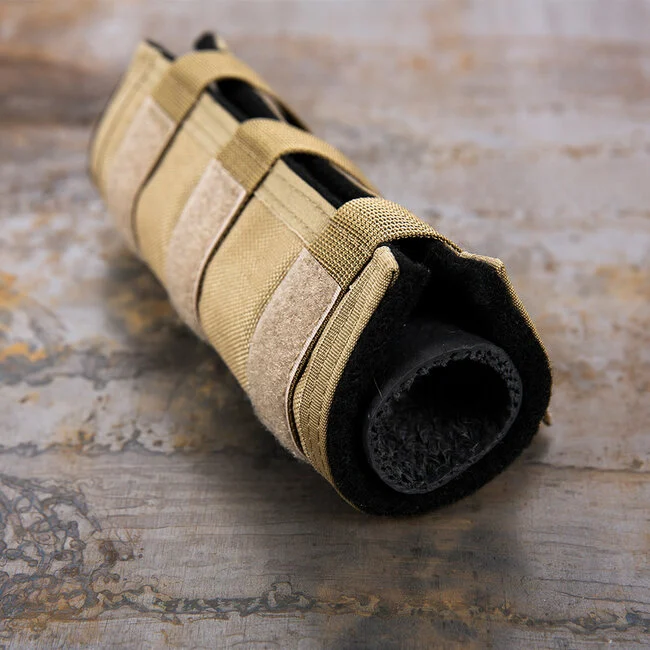
A suppressor can hit temperatures well over 700 degrees Fahrenheit after just a few rounds, hot enough to burn skin, melt gear bags, and throw off heat waves that distort your view through a scope, specifically when using thermal optics. A suppressor cover, a heat-resistant sleeve that fits over the can, solves all three problems at once.
Beyond safety, covers matter most for anyone shooting through a magnified or thermal optic. The heat mirage coming off an uncovered suppressor after a string of shots can genuinely ruin your sight picture, which matters at the range and matters even more on a hunt when a follow up shot counts. Spotted Dog carries the SilencerCo High Temp Suppressor Cover, built to handle sustained shooting without breaking down.
Cleaning and maintenance accessories
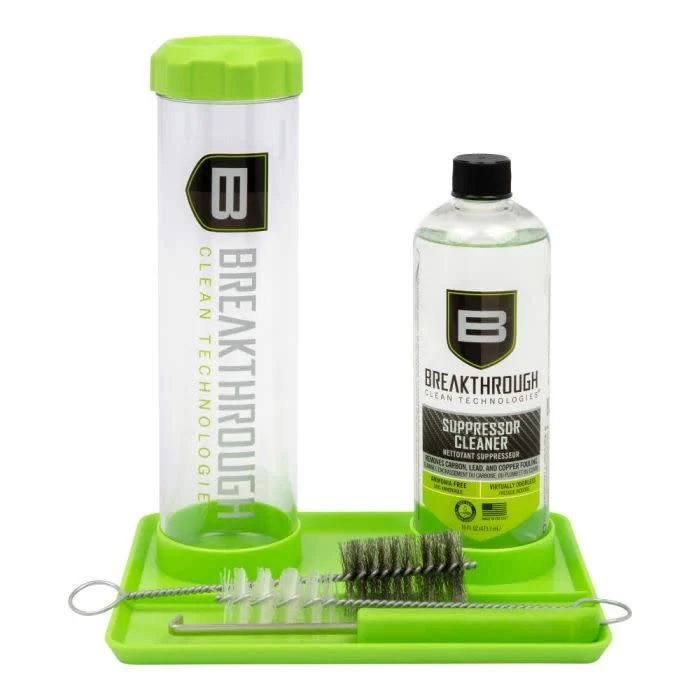
Rimfire and pistol-caliber suppressors collect carbon and unburned powder fast, and a dirty can loses some of its sound reduction over time. A dedicated cleaning kit with the right brushes and solvent, like the Breakthrough Suppressor Cleaning Kit, keeps a .22 LR or 9mm suppressor performing like new. Centerfire rifle suppressors need far less maintenance since they run cleaner, but a periodic inspection for baffle buildup is still worth doing.
Always check your specific suppressor's manual before cleaning it. Some designs are user serviceable, and some are sealed, and taking apart a sealed suppressor can void the warranty or damage the internals.
Pistons and boosters for handgun suppressors
If you are running a suppressor on a semi-automatic pistol, you likely need a piston, sometimes called a booster, to let the barrel cycle correctly under the added weight of the can. A piston like the Rugged Obsidian, built with a non-slotted, full-circumference gas seal, cuts down on the gas blowback that pistol suppressors are known for. Get the piston matched to your exact pistol model, since fitment varies by barrel design.
Building your first accessory kit
Start with the mount that matches your host firearm and your suppressor; add the muzzle device it requires, and decide early whether quick-detach convenience is worth the extra cost over direct thread. From there, a cover is the highest value add for anyone shooting through an optic or running higher round counts, and a basic cleaning kit rounds things out for rimfire and pistol-caliber owners.
Do I need a suppressor cover?
Not always, but it is worth it if you shoot through a thermal or magnified scope or put more than a few rounds through your suppressor in one session, since heat mirage and burn risk both increase with volume.
How often should I clean my suppressor?
Rimfire and pistol caliber suppressors benefit from cleaning every few hundred rounds. Centerfire rifle suppressors run cleaner and generally need only an occasional inspection.
Can I use any mount with any suppressor?
No. Mounts are brand and system specific. An ASR mount only works with ASR compatible suppressors and muzzle devices, and the same rule applies across other mounting systems.
Do I need a piston for a suppressed pistol?
Most semi-automatic pistols do, since the added weight of a suppressor can prevent the slide from cycling correctly without one. Revolvers and bolt action pistols do not need a piston.
Get your setup dialed in
Whether you are building out your first can or upgrading an older setup, our suppressor accessories selection covers mounts, brakes, covers, and pistons for every major suppressor brand we carry. Browse our full suppressor collection to see what pairs with your rifle or pistol, and give our team a call if you are not sure what you need.


