

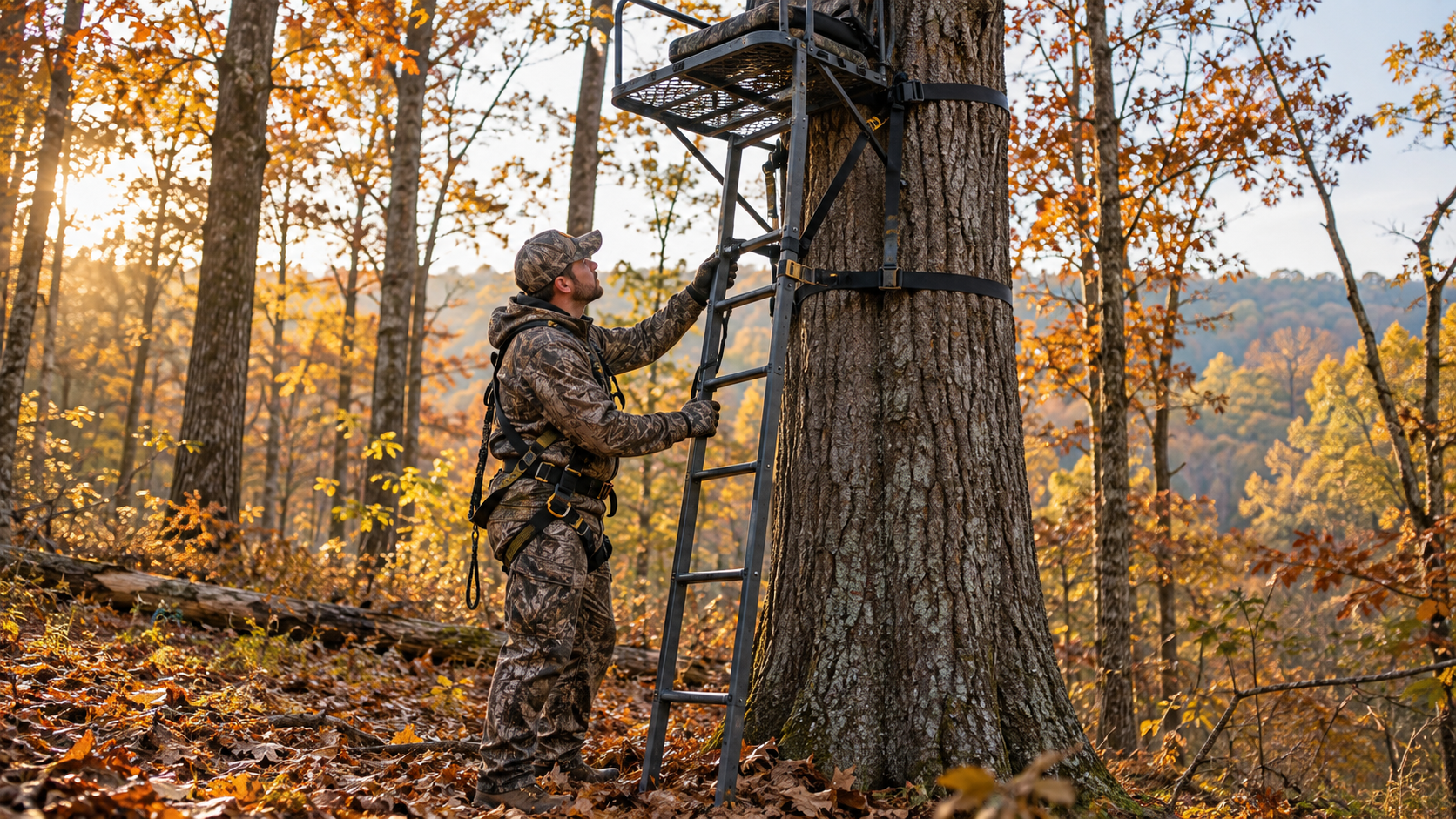
Deer Stand Safety Checklist: What to Inspect Before You Climb
Tree stand safety comes down to three things: inspect your gear, wear a full-body harness, and connect to the tree before your feet leave the ground. Skip any one of those and you are gambling with a fall that puts most hunters in the hospital, not just on the couch for a day.
September is National Tree Stand Safety Awareness Month, and LDWF reminds Louisiana hunters every year to follow the ABCs of tree stand safety before archery season opens. It lines up with the exact week most local hunters are pulling stands out of storage and hanging them again. That makes right now the best time to run through a full inspection, not the first cold morning you climb up in the dark.
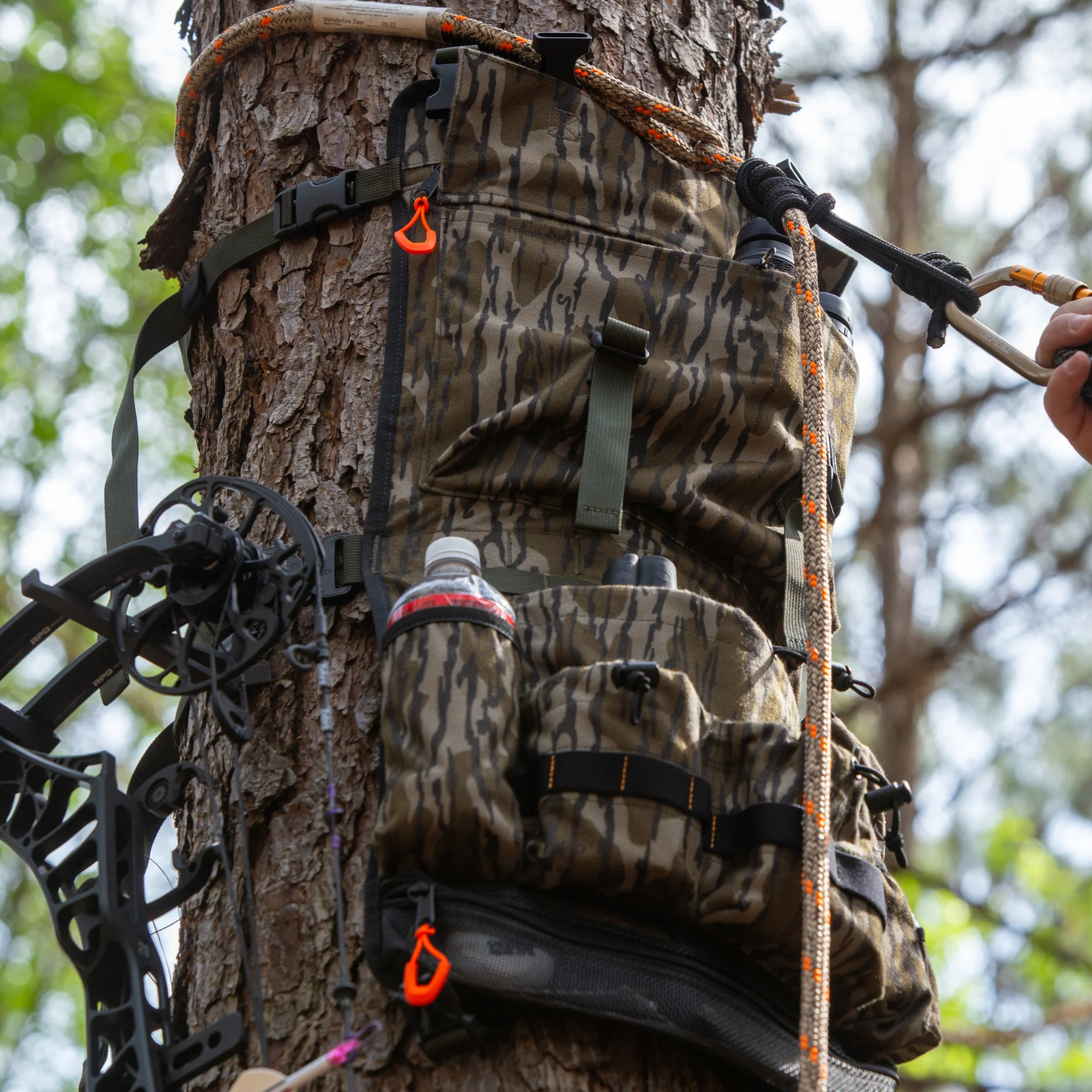
Why this matters more than it seems
Nationally reported data on tree stand falls shows that the large majority of hunters injured were not wearing a harness, and nearly all were not connected to the tree at all when they fell. Those numbers are not close calls. They are the difference between a stand that saves you and a stand that puts you in the emergency room.
Most falls do not happen while sitting still in the stand. They happen during the climb up, the climb down, or while hanging and taking down stands during the pre-season. That is exactly the window we are in right now.
Pre-season equipment checklist
Before you hang or re-hang a single stand this year, go through every piece of it on the ground.
Straps and cables. Check every strap for fraying, cracking, or dry rot, and every cable for kinks or broken strands. A strap that looks fine folded up in a bag can fail once it takes your full weight against a tree.
Bolts, chains, and welds. Tighten every bolt and check welds for rust or hairline cracks, especially on stands that have sat outside all summer. Louisiana humidity is hard on metal hardware year-round.
Platform and seat. Look for soft spots, cracked welds, or worn cable connectors on both the platform and the seat. If anything flexes more than it should, replace the part before the season, not after something breaks.
Climbing sticks or ladder sections. Check every step and connection point for looseness. A single loose step is enough to cause a fall on the way up, before you are even in the stand.
Full-body harness. Inspect the webbing, buckles, and tether for wear, and replace any harness older than the manufacturer's recommended lifespan. A harness is not a one-time purchase you use forever.
The three habits that prevent almost every fall
Equipment inspection catches the gear that fails. These three habits catch the mistakes that cause the other falls.
Wear the harness every time. Not just during the hunt, but while climbing up, climbing down, and hanging or removing stands. Most falls happen outside the actual hunt, during setup and takedown.
Connect before your feet leave the ground. Attach your tether to the tree at ground level before you start climbing, and stay connected the entire way up and down.
Use three points of contact. Keep two hands and one foot, or two feet and one hand, in contact with the ladder or climbing sticks at all times. Never carry your gun, bow, or gear in your hands while climbing. Use a haul line instead.
Safety differs by stand type
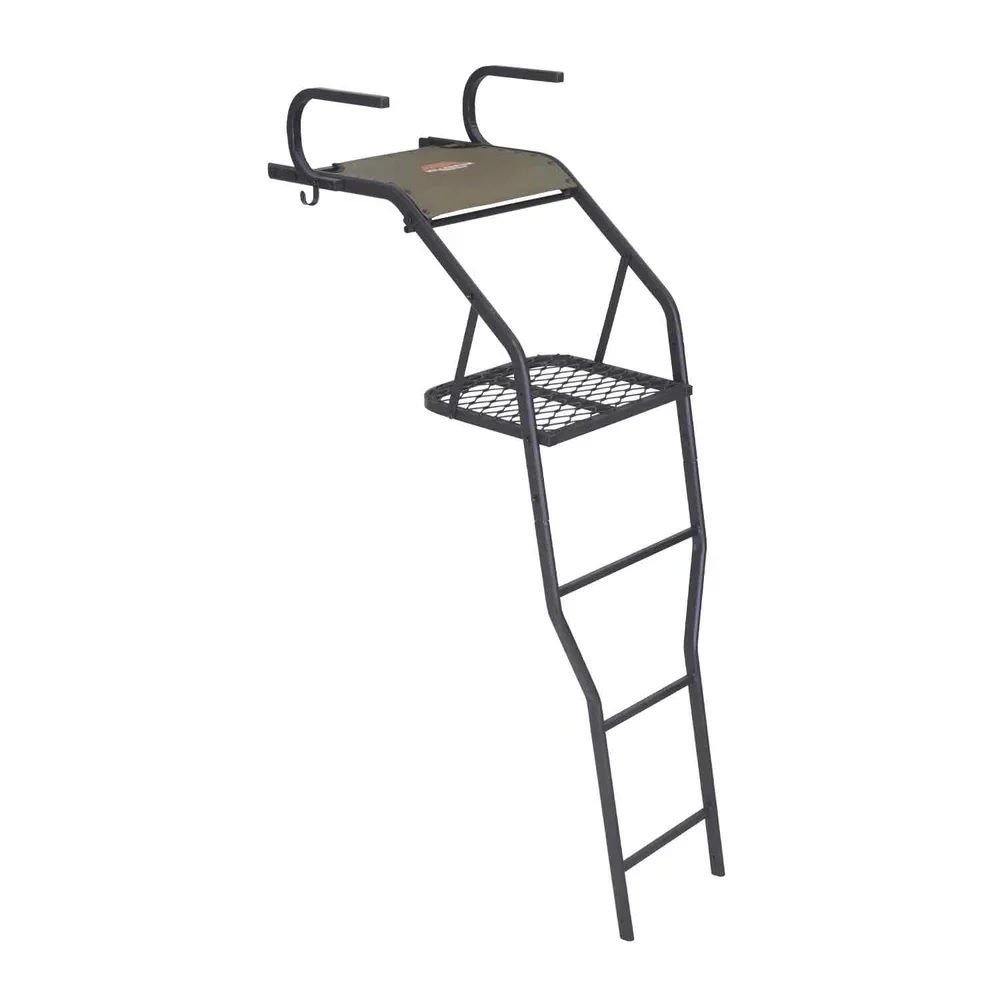
A ladder stand, a climbing stand, and a box blind each fail in different ways, so the inspection changes with the stand. Our guide to climbing stand vs. box blind vs. tripod breaks down how each stand type performs, but from a safety standpoint, climbing stands need the most attention paid to cable tension and tree fit, box blinds need their tower bolts and ladder rungs checked, and any tripod needs its legs inspected for stability on uneven ground before the platform ever gets used.
Whatever stand you are hunting from this season, browse our full deer stand selection or check out tree saddle setups if you are considering a lighter, harness-based system for mobile hunts. And once your stand is up and inspected, our guide to trail cameras and stand placement covers where to hang a camera nearby so you know what is moving before your first sit.
Frequently asked questions
What are the ABCs of tree stand safety?
Always remove and inspect your equipment before use, buckle your full-body harness every time, and connect to the tree before your feet leave the ground. These three habits, developed by the Tree Stand Safety Awareness Foundation, address the causes behind almost every reported fall.
What should you always wear in a tree stand?
A full-body safety harness, worn and connected from the moment you start climbing until your feet are back on the ground. A harness sitting in your pack does nothing to prevent a fall.
How often should I replace a tree stand harness?
Follow the manufacturer's recommended lifespan, and always replace a harness that shows fraying, cuts, or sun damage regardless of age. Most manufacturers recommend replacement every few years even with light use.
What is the most common cause of tree stand falls?
Falls most often happen while climbing up or down, or while hanging and removing stands, not while sitting still during the hunt. Staying connected during those transitions prevents the majority of reported accidents.
Get your stand ready before opening weekend
Stop by the shop in Columbia or call us, and we will help you find the harness, stand, or saddle setup that fits how you hunt.


