

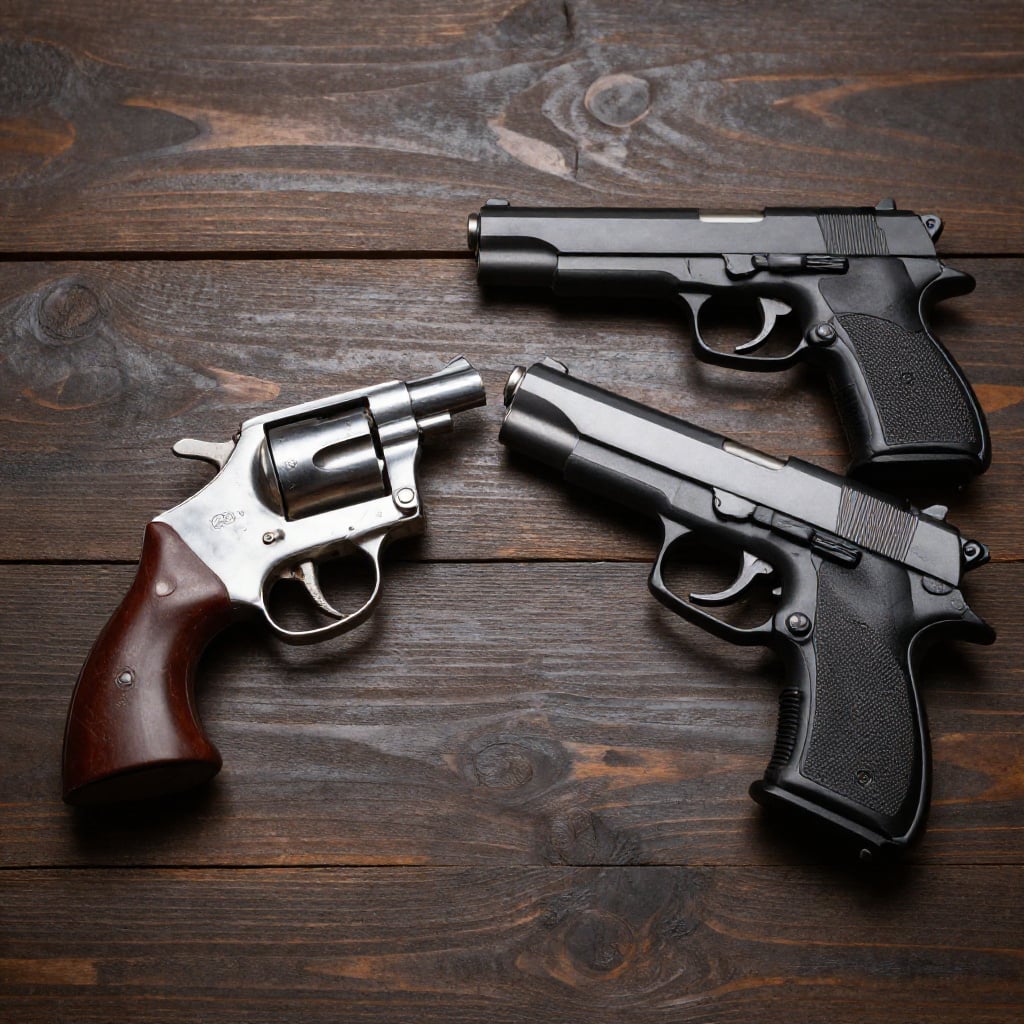
Revolver vs semi-auto: which handgun should you buy first
The revolver vs. semi-auto question is one of the first things most new buyers run into, and the answer depends more on how you plan to use the gun than on which platform is objectively better. Both are reliable. Both will work for home defense or range shooting. The decision comes down to your priorities around capacity, carry, simplicity, and how much time you plan to spend training.
This guide lays out the real differences so you can walk into a gun store with a clear idea of what you are looking for.
How each type works
A revolver uses a rotating cylinder that holds cartridges, typically five or six rounds in a carry-sized frame. When you pull the trigger on a double-action revolver, the cylinder rotates, aligns a fresh round with the barrel, and the gun fires. That is the entire mechanical process. No magazine, no slide, and no round in the chamber to worry about. You load it, close the cylinder, and the gun is ready.
A semi-automatic pistol feeds rounds from a detachable magazine in the grip. When you fire, the energy from the shot cycles the action: the slide moves rearward, ejects the spent case, chambers the next round from the magazine, and resets, ready to fire again. This happens in fractions of a second. The manual of arms is more involved than a revolver; you need to load the magazine, seat it properly, and rack the slide to chamber the first round.
With a few hours of instruction and range time, neither process is complicated. But for a buyer who wants the simplest possible path to a working firearm, the revolver wins on that count alone.
Reliability: the real story
Revolvers have a reputation for being more reliable than semi-autos, and that reputation is partly earned but partly outdated. A revolver can be cleared by pulling the trigger again if a round fails to fire due to a dud primer. The cylinder simply advances to the next round. With a semi-auto, a failure to fire requires a tap-rack-bang drill: tap the magazine, rack the slide, reevaluate. That takes training.
What most people do not account for is that revolvers can jam too. A bullet that sets back in its case from heavy recoil can lock the cylinder mid-string. An ejection star that catches a case rim creates a problem that is slower and harder to clear than any semi-auto malfunction. These failures are less common, but when they happen, they are not quick fixes.
Modern semi-automatic pistols from established manufacturers, Glock, Sig Sauer, Springfield, and Smith & Wesson, are extremely reliable with quality ammunition. The platform that dominated law enforcement and military use for the last 30 years is not unreliable. Police departments transitioned from revolvers to semi-automatic handguns through the 1980s and 1990s not because revolvers were inferior but because semi-autos offered more capacity, faster reloads, and easier stoppages to clear.
The practical answer: both platforms are reliable. Semi-autos have more moving parts and more ways to fail. Revolvers have fewer parts but harder failures when they do occur. For a new shooter who is not yet trained in stoppage drills, a revolver's simpler failure mode is a genuine advantage.
Capacity and reloading
A standard carry revolver holds five or six rounds. A standard carry semi-auto holds anywhere from 10 to 17 rounds, depending on the model. That gap is significant.
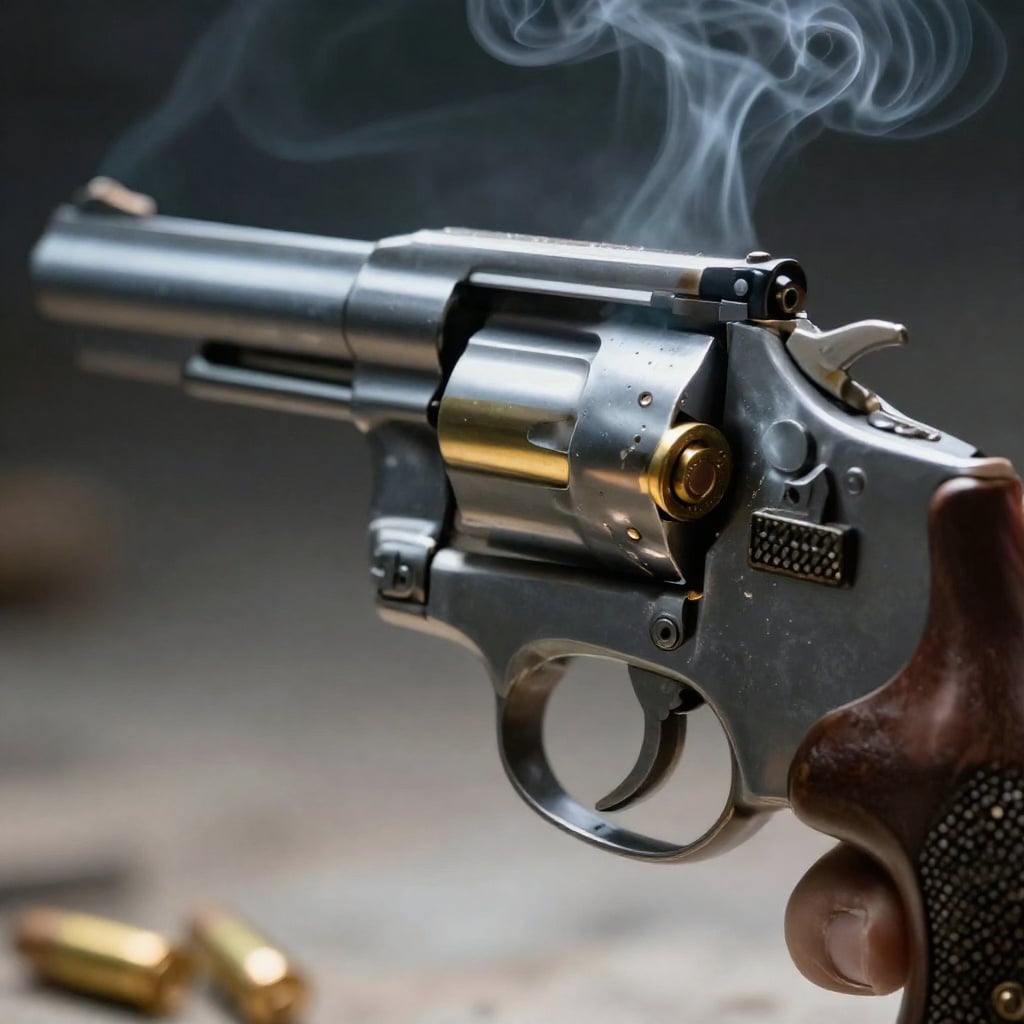
Most real-world defensive encounters are over in fewer than six rounds, and statistically most civilians involved in shootings fire far fewer. So the capacity argument can be overstated. But having more rounds in the gun means more margin for misses under stress, and stress degrades accuracy. For most new shooters who have not put in thousands of rounds of defensive training, the larger magazine is a practical advantage.
Reloading tells a similar story. Dropping a semi-auto magazine and seating a fresh one takes roughly two seconds with practice. Reloading a revolver with a speedloader under stress takes longer and requires practice. If a reload ever becomes necessary in a defensive situation, the semi-auto is faster.
Carrying and concealability
Revolvers built for carry, snub-nose J-frames, Ruger LCRs, and similar platforms can be quite compact. But the cylinder is always the widest point of a revolver. That width prints more than the flat grip of a slim semi-auto. For everyday IWB carry under a t-shirt or a light shirt, a semi-auto typically disappears better.
Larger hunting and range revolvers are a different category entirely. A Colt Anaconda or Ruger Redhawk in .44 Magnum is purpose-built for the field, not daily carry. For concealed carry, Spotted Dog carries compact snub-nose revolvers built for exactly that purpose: Smith & Wesson Airweight J-frames, Ruger LCRs, and Taurus Ultralite revolvers, all in .38 Special and sized for pocket or IWB carry. Browse our semi-automatic pistols and revolvers to compare what we carry across both types.
In Louisiana summers, the concealability difference matters. A slim 9mm semi-auto under a light cover shirt is more comfortable and prints less than a cylinder-heavy revolver. For year-round carry, the semi-auto is the more practical choice in this climate.
For either platform, the holster matters as much as the gun. A well-fitted IWB holster with a sweat shield changes the carry experience significantly. Take a look at our holster collection before finalizing your setup.
Ease of use for new shooters
This one gets debated regularly, and the honest answer is more nuanced than most guides admit.
The argument for revolvers as a beginner's gun: no manual of arms beyond loading and pulling the trigger, no slide to rack, no magazine to seat, no safety to engage or disengage. Point and pull.
The argument against it: a double-action revolver trigger pull is long and heavy, typically 10 to 12 pounds, which can make accurate first shots harder for new shooters. Developing trigger control on a heavy DA pull takes time. Some instructors believe the process actually builds better fundamentals. Others think it introduces habits that slow a shooter down.
Semi-auto triggers are generally lighter and shorter, which can help with accuracy. But the mechanical process of properly loading, seating a magazine, racking the slide, and understanding the manual of arms takes more initial instruction.
The practical answer is that a few hours of solid instruction makes both platforms accessible. What matters more than platform type is whether the gun fits your hand, whether you can manipulate the controls comfortably, and whether you can get to a range regularly enough to stay proficient with it.
Price
Revolvers span a wide range. Heritage Arms single-action revolvers start under $200. A quality Smith & Wesson J-frame runs $400 to $600. High-end revolvers from Kimber climb well past $1,000. The technology is proven, and the manufacturing is mature, which keeps mid-tier revolver prices accessible.
Semi-autos follow a similar pattern. Reliable entry-level options from Taurus, Canik, and Ruger fall under $400. The platforms that dominate the carry market, Glock, Sig, and Springfield, run $500 to $900 for standard models. Aftermarket and accessories for semi-autos are generally less expensive per item because the market is larger.
For a first gun on a budget, a revolver at the $300 to $400 price point gives you a reliable defensive firearm with minimal complexity. At the same budget range, a semi-auto will typically give you more capacity and a larger aftermarket. Neither option is a bad choice at that price.
Which should you buy first
Buy a revolver if:
- You want the simplest possible platform with no manual of arms
- You plan to keep it at home for a self-defense application with minimal range time
- A long, consistent trigger pull for deliberate defensive shooting suits your approach
- You prefer proven, simple mechanics over features
- You are considering a backup gun to complement a semi-auto you already own
Buy a semi-auto if:
- You plan to carry daily or regularly
- You want higher round capacity
- You expect to train regularly and develop competency under time pressure
- Concealment matters to you and a slim profile is a priority
- You want access to the widest aftermarket support for upgrades and accessories
For most first-time buyers who plan to carry in Louisiana, a semi-auto is the more practical starting point. Platforms like the Sig P365 or Springfield Hellcat offer compelling advantages in capacity, concealability, and aftermarket support, making them strong choices for daily carry in this state.
That said, a first-time buyer who is primarily interested in home defense, does not plan to carry regularly, and has limited time for range training might be better served by a revolver's simpler manual of arms. You can't go wrong with either option, since both are reliable.
The best thing to do is handle both before buying. Come into Spotted Dog in Columbia and put both platforms in your hand. Explore our full pistols collection and ask our staff to walk you through the differences in person. Grip fit, trigger reach, and hand size will tell you more than any comparison article.
If you are leaning toward semi-auto and want a detailed comparison of the two most-carried brands, read our guide to Glock vs Sig Sauer: which pistol is right for you. If carry is your primary purpose, our rundown of the best concealed carry pistols for Louisiana in 2026 covers the specific platforms worth considering.
Stock up on pistol ammunition for whichever platform you choose. Dry fire practice is valuable, but you cannot replace time behind the gun with live rounds.
Frequently asked questions
Should I get a revolver or a semi-auto for home defense?
Either works for home defense. A revolver is simpler to operate with minimal training, which matters in a high-stress scenario at 2am. A semi-auto gives you more rounds and faster reloads. If you keep the gun in a bedside drawer and have limited training time, the revolver's simplicity is a real advantage. If you plan to train regularly, a semi-auto's capacity and ergonomics give you more to work with.
Is a revolver easier to use than a semi-auto?
In some ways, yes. Revolvers have fewer steps in the loading and firing process, and you can clear failure-to-fire malfunctions by pulling the trigger again. Semi-autos require more initial instruction on the manual of arms, loading magazines, racking the slide, and clearing stoppages. With proper instruction, both are straightforward. The initial learning curve is lower for a revolver.
Are revolvers more reliable than semi-autos?
Revolvers are more reliable in one specific way: they have fewer small parts that can fail during cycling. A dud round in a revolver is handled by pulling the trigger again. Modern semi-autos from reputable manufacturers, however, are extremely reliable with quality ammunition. The reliability gap between the platforms is much smaller today than it was 30 years ago.
Why do police no longer carry revolvers?
Most law enforcement agencies in the United States transitioned from service revolvers to semi-automatic handguns through the 1980s and 1990s, primarily for capacity and faster reloads. Officers needed a competitive platform to deal with armed suspects who increasingly carried higher-capacity semi-autos. The Glock 17 and similar 9mm semi-autos provided 17 rounds versus the six in a service revolver, and magazines reload faster than a speedloader under stress.


