

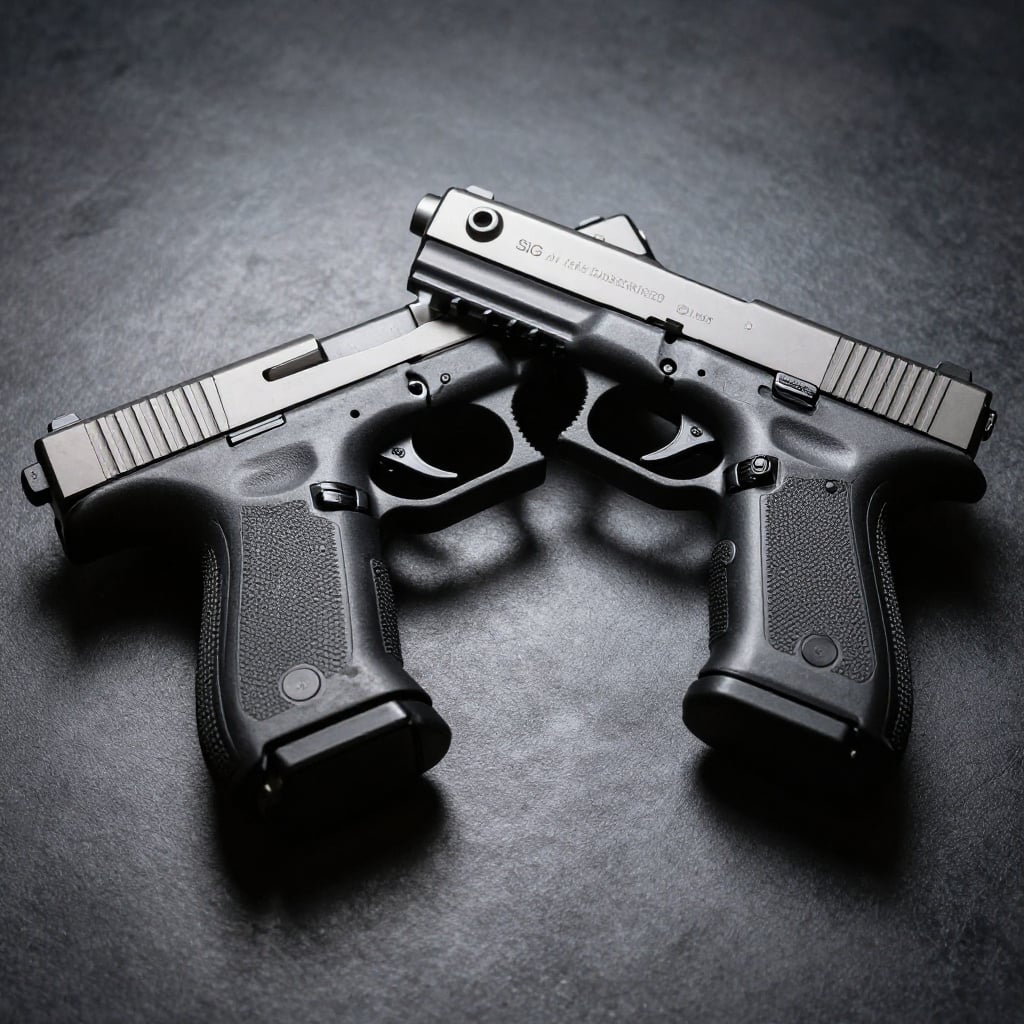
Glock vs Sig Sauer: Which pistol is right for you
Two names come up in almost every handgun conversation: Glock and Sig Sauer. Both are carried by law enforcement, both are proven in the field, and both will show up when you search for the best pistol for home defense or concealed carry. Comparing Glock vs Sig Sauer is the right place to start.
The question is not which brand is better in the abstract. It is which one works for you. Louisiana buyers also have some specific context worth knowing: the state now allows constitutional carry for residents who can legally possess a firearm, but the federal age requirement for purchasing a handgun from a licensed dealer remains 21 or older.
Here is how these two brands actually stack up.
Glock: built around simplicity
Glock pistols have been in production since the early 1980s, and the design has barely changed in four decades. That says something. The striker-fired polymer frame Glock introduced became the template most modern pistols follow.
The core appeal is how little can go wrong. Fewer parts than almost any competitor, a consistent trigger pull from shot to shot, and a track record that includes decades of military and police service worldwide. The "Safe Action" system uses three internal passive safeties and no external manual safety, which some shooters prefer and others find uncomfortable until they spend time on the range.
Field-stripping a Glock takes about 30 seconds. Every part is easy to source and affordable. The aftermarket for Glock is larger than any other pistol platform, with more trigger, sight, and barrel options than you will reasonably need. If customization is part of the plan, Glock gives you the widest selection.
Spotted Dog's top-selling Glock models are the 19, 43X, 17, and 45. The Glock 19 and 17 are available in both Gen 5 and Gen 6, with Gen 6 the current lineup across most models. The Glock 43X is the slim single-stack option for deeper carry, and the Glock 45 is a crossover 9mm with a full-size grip and compact slide.
Sig Sauer: precision and modularity
Sig Sauer has been building handguns since 1975. The company made its name through European law enforcement contracts before expanding into the U.S. market, and the reputation for tight tolerances and refined triggers. In 2017, the U.S. Army selected the Sig P320 as its standard-issue sidearm after a competitive evaluation against Glock and other manufacturers.
Where Glock built its reputation on simplicity, Sig built theirs on precision engineering. Sig pistols come with better factory sights, smoother triggers out of the box, and grip contours that most shooters find more comfortable on first contact. The P320 platform takes things further with a modular design: the serialized part is the fire-control unit inside the frame, not the frame itself. You can swap grip modules, slides, and calibers without going through a dealer transfer.
The P365 changed the concealed carry market when it launched in 2018. It packed 10+1 rounds into a frame smaller than most single-stack pistols, which was not considered possible at the time. It became one of the best-selling carry guns in the country almost immediately. Current Sig inventory at Spotted Dog includes the P320 and P365 families in several configurations.
How they compare
Reliability
Both are reliable. The choice is not even a close call. Field reports, law enforcement data, and years of consumer use show both platforms run without issue under normal conditions and most extreme ones.
Glock has a longer track record by about a decade and more-documented military and police use globally. Sig has closed that gap, particularly since the P320 adoption. The only meaningful reliability concern on the Sig P320 recently was a drop-safety issue that Sig addressed through a voluntary upgrade program. Current-production P320 and P365 pistols do not have this problem.
For most buyers, reliability is not what sets these two apart. They both pass.
Ergonomics and grip fit
This is where the brands split most clearly, and it matters more than most technical specs.
Glock grips have a steeper angle than most pistols, which some shooters find points naturally and others consider awkward for the first few hundred rounds. The Gen 5 texture is aggressive enough to hold well under pressure. The Gen 3 is slick, and many experienced owners replace the grips or stipple them. The molded finger grooves on older generations do not fit every hand.
Sig grips are more rounded and fill the hand differently. The standard P320 frame tends to work well for a wider range of hand sizes. The P365 is worth handling before you commit because the micro-compact dimensions fit some hands comfortably and feel cramped for others.
The only real advice here: get your hands on both before deciding. Grip fit affects your accuracy and your confidence with the gun more than trigger pull weights or slide tolerances.
Trigger feel
Stock Glock triggers are predictable and consistent, which is what counts for defensive use. The Gen 5 trigger has a rolling break and short reset. It is not refined, but it is clean and works the same way under stress as on the range.
Sig triggers, particularly on the P320 and P365, tend to be smoother and lighter than stock Glocks. The flat-face trigger on the X-Series models is noticeably better than the standard curved shoe. Most shooters find Sig triggers easier to shoot accurately right out of the box, without any upgrade work.
If trigger quality is a priority and you are not planning to spend money on aftermarket parts, Sig has a real edge here.
Size and concealability
| Model | Length | Height | Slide width | Weight unloaded | Capacity |
|---|---|---|---|---|---|
| Glock 19 | 7.28 in | 5.04 in | 1.00 in | 21.4 oz | 15+1 |
| Sig P320 Compact | 6.97 in | 5.10 in | 1.06 in | 22.5 oz | 15+1 |
| Glock 43X | 6.50 in | 5.04 in | 0.87 in | 18.7 oz | 10+1 |
| Sig P365 | 5.80 in | 4.30 in | 1.06 in | 17.8 oz | 10+1 |
The Glock 19 and Sig P320 Compact are close enough in size that carry preference usually comes down to holster fit and grip feel rather than measurements. The dedicated slim-carry options are the Glock 43X and the Sig P365, and the P365 is meaningfully smaller while matching the 43X on capacity.
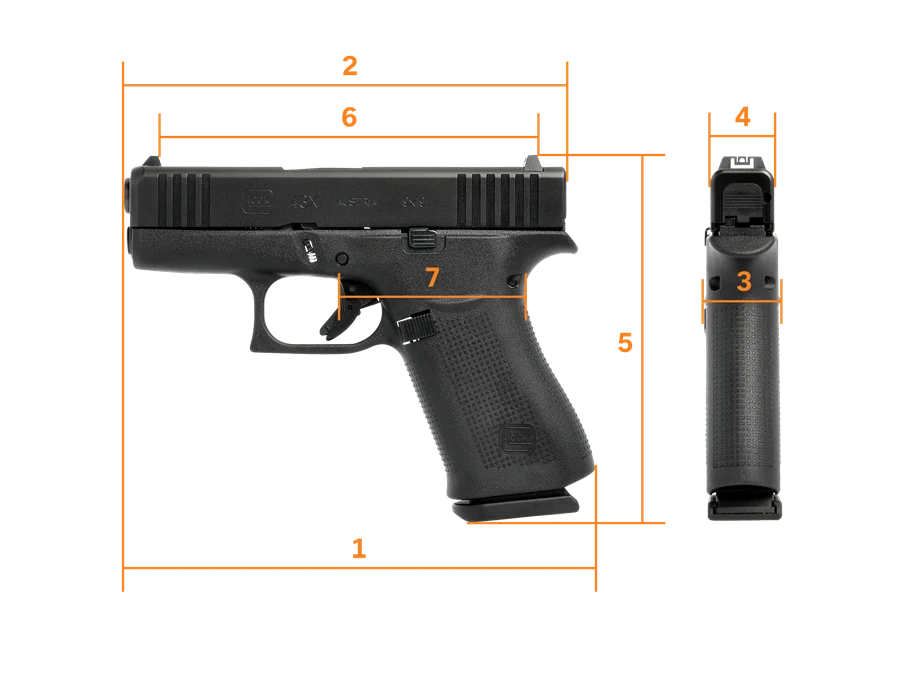
In Louisiana summers, where you are working with lighter cover garments, that size difference matters. The P365's dimensions make it easier to carry without printing under a t-shirt or an untucked button-down. Choosing the right carry holster makes as much difference as the gun when it comes to everyday concealment; an IWB setup with good retention and a sweat shield is worth the investment.
Aftermarket support
Glock wins this one. More triggers, more sights, more barrels, more holsters, and more everything. The Glock aftermarket developed over 40 years, and the ecosystem is larger than any other pistol platform. Parts are available at every gun shop and online retailer, and they are affordable. Spotted Dog carries Radian Weapons upgrades for the Glock 19, including the Afterburner compensator and Ramjet barrel combo for recoil reduction and improved accuracy.
Sig has built significant aftermarket support for the P320 and P365 over the last several years, and the range of options is now solid. Radian parts are available for the P320 platform as well; ask in-store or browse online. If you want out-of-the-box performance with minimal customization, Sig actually makes that easier because the factory setups start from a higher baseline. But if you want to build a platform from the ground up, Glock gives you more choices.
Price and value
Most Glock and Sig pistols fall in the $500 to $900 range depending on the model and configuration. Glock tends to run slightly lower. Sig commands a modest premium for night sights, optics-ready cuts, and the engineering work that goes into something like the P365.
Magazines are where the cost gap widens over time. Glock 19 magazines run $25 to $30 from most retailers. Sig magazines run $40 and up. If you plan to stock several spares, and you should, that adds up. Pick up a supply of 9mm pistol ammunition at the same time so you can train consistently with whichever platform you choose.
Which one is right for you
Choose Glock if:
-
You want the simplest platform to maintain, with fewer things to learn
-
You plan to build it out with aftermarket parts over time
-
You want lower long-term ownership costs, including magazines and support gear
-
The Glock 43X or 19 fits your hand well when you hold it
Choose Sig Sauer if:
-
A better factory trigger matters to you from day one
-
You want the P365's capacity-to-size ratio for concealed carry
-
You prefer the rounded grip contours and want modularity across frame sizes
-
You are comfortable with a slightly higher per-round cost of ownership
Neither answer is wrong. Both will hold up for home defense, range training, and daily carry. The decision usually comes down to how each gun fits your hand and what you value more: a wider ecosystem of parts or a more refined out-of-the-box experience.
If you are still unsure, come in to Spotted Dog in Columbia. Handling both side by side is the only way to know which one actually points naturally for you. Browse our full pistol selection to see current inventory before you visit.
If you are planning to carry in Louisiana, read our guide to the best concealed carry pistols for Louisiana in 2026 for a more focused look at what works in this state's heat and humidity. And if you have not decided between action types yet, our breakdown of revolvers vs semi-automatic handguns is worth reading before committing.
Frequently asked questions
Are Sig Sauers better than Glocks?
Neither is objectively better. Glock leads on long-term track record, parts availability, and simplicity. Sig leads on factory trigger quality, ergonomics, and modularity. Most shooters who own both will tell you the answer depends on what you want from the gun.
Why does the military use Sig and not Glock?
The U.S. Army adopted the Sig P320 in 2017 after a competitive evaluation called the Modular Handgun System contract. The P320 won based on its modular design, caliber conversion capability, and performance in testing. Glock submitted the Gen 5 19X but did not win the contract.
Is Glock or Sig safer?
Both are safe when used correctly. Glock uses three internal passive safeties with no external manual safety. Sig P320 pistols use a similar striker-fired system with internal passive safeties, and some models offer an optional thumb safety. Safe handling practices matter more than which safety mechanism is on the gun.
Is the Sig P365 as reliable as a Glock?
Yes. The P365 has a strong reliability record since its launch in 2018. Early production runs had some reported issues that Sig addressed. Most independent testers and defensive shooting instructors consider current-production P365 pistols reliable for carry use.


