

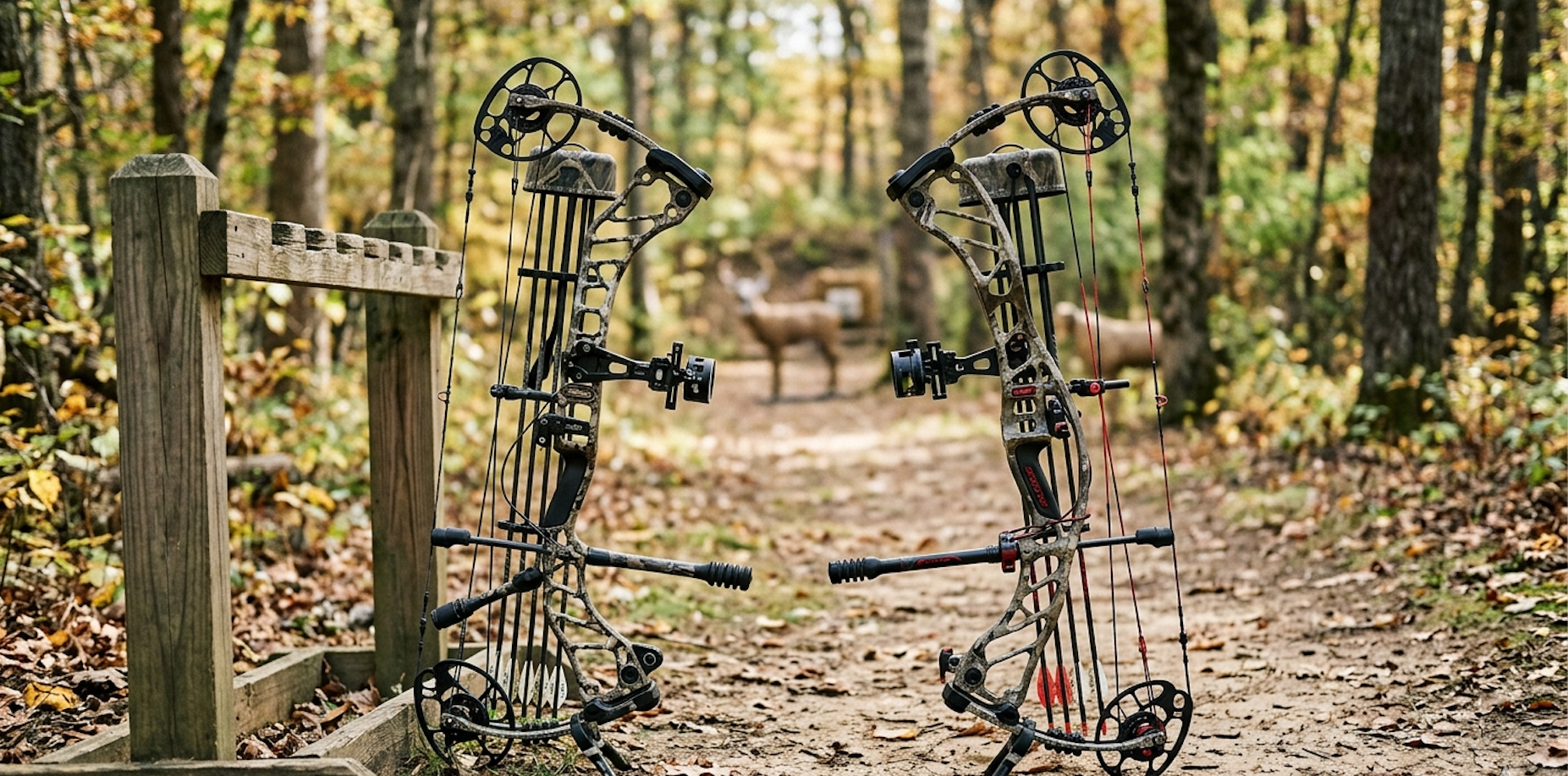
Mathews vs. Hoyt 2026: Which Compound Bow Is Right for You?
Mathews and Hoyt are the two most debated compound bow brands in bowhunting. If you are trying to decide between them for 2026, the answer is shorter than you would expect: Mathews if you want a dead-quiet shot with a firm back wall, or Hoyt if you want a smoother draw cycle and the option to go carbon.
Everything else comes down to how you shoot.
How These Two Brands Think Differently
Mathews (Wisconsin) builds around shot feel. Their bows are engineered to absorb vibration and deliver a quiet, planted shot. Long aluminum risers, aggressive cam systems, and damping technology throughout.
Hoyt (Salt Lake City) builds around durability and versatility. Rounded TEC risers, smooth draw cycles, deep let-off valleys, and a carbon riser lineup (the RX series) that no aluminum bow can match for weight.
Neither is better. They are optimized for different priorities.
2026 Flagships: Specs Side by Side
The two bows most compared right now are the Mathews ARC 30 and the Hoyt Alpha AX-3 29.
| Spec | Mathews ARC 30 | Hoyt Alpha AX-3 29 |
|---|---|---|
| Axle-to-Axle | 30" | 29.5" |
| Brace Height | 6" | 6.375" |
| Weight (bare) | ~3.89 lbs | ~4.4 lbs |
| IBO Speed | ~350 fps | ~342 fps |
| Draw Lengths | 24.5"–30" | 25.5"–31" |
| Draw Weights | 55–80 lbs | 40–80 lbs |
| Let-Off | 80% / 85% | 75% / 85% |
| Riser | Aluminum | Aluminum (or RX-10 carbon) |
For hunters who prefer a longer axle-to-axle, the Mathews ARC 34 and Hoyt Alpha AX-3 33 are the equivalents in a longer-format shootout.
Draw Cycle: The Clearest Difference
This phase is where you will feel the brands split.
Mathews builds to a hump before the cams roll over into let-off. The back wall is firm. You know exactly when you are anchored. Some shooters love this setup for consistency. Others find that it takes some adjustment when coming from a smoother draw.
Hoyt draws linearly and eases into let-off. The valley is deep and forgiving. You can relax at full draw without the bow jumping forward. For high-volume shooters or anyone who holds at full draw for longer, this smoothness reduces fatigue.
If you want a defined, locked-in anchor, choose Mathews. If you want something that feels easy through the whole draw, choose Hoyt.
Noise and Vibration
Mathews sets the standard here. Their harmonic stabilizer and damping systems absorb hand shock to a degree that surprises most shooters. The bow feels lifeless at the shot. Very little reaches your hand, and the sound profile is low.
Hoyt aluminum bows are quiet and well-controlled, though some shooters notice slightly more hand feedback than a comparably set-up Mathews. The RX-10 carbon bow is a different case. Carbon naturally dampens resonance, and Hoyt's carbon builds are some of the quietest, lightest bows on the market.
For treestand whitetail hunters at close range, the Mathews edge in this category is real. For backcountry elk hunters counting every ounce, Hoyt's carbon option may matter more.
Draw Length Adjustment
This is a genuine cost difference between the two brands.
Mathews uses draw-length-specific modules. Our pro shop sets up the mods at no cost to the customer. Every Mathews bow is fully optimized for the exact draw length you set it to.
Hoyt's HBX Xact cam (on the 2026 Alpha AX-3) adjusts across a 1.75" range within a single module, in quarter-inch increments. No extra modules needed. For shooters still finding their draw length, that flexibility matters.
Which Hunting Style Fits Each Brand
Whitetail from a treestand: Mathews. The shot is dead quiet, ATA options are short, and movement is minimal. The ARC 30 at 30" is compact without giving up stability.
Western hunting, elk, backcountry: Hoyt. Built to handle cold, moisture, and rough terrain. Cam Hanes has shot Hoyt for years because the bows do not quit. The RX-10 carbon cuts weight on long rides.
3D and target archery: Both are competitive. Mathews has strong representation on the 3D circuit. Hoyt's smooth draw and forgiving valley are well-suited for long days of competition.
New bowhunters: Hoyt's draw length flexibility makes setup easier. You will not need to buy modules every time you adjust your form.
What the 2026 Bow Tests Say
Field and Stream's 2026 compound bow test named the Hoyt AX-3 33 as best overall and the Mathews ARC 30 as most accurate. That result captures both brands well. Hoyt wins in overall performance and shootability. Mathews wins on precision.
Both flagships are closer in overall feel than they have been in years. The gap is shrinking. At this point, it really is a matter of personal preference.
Frequently Asked Questions
Is Mathews or Hoyt better for beginners?
Hoyt. The draw length flexibility on the HBX Xact cam means you can adjust without buying new modules as your form develops.
Are Hoyt bows made in the USA?
Yes. Hoyt Archery is based in Salt Lake City, Utah.
Which is faster in 2026?
The Mathews ARC 30 has an IBO rating of about 350 fps, while the Hoyt Alpha AX-3 29 rates at 342 fps. In a real hunting setup with a full quiver and accessories, both will shoot slower. The 8 fps gap will not change an outcome in the field.
What are the top compound bow brands?
Mathews and Hoyt lead the premium segment. Prime, PSE, Bowtech, and Xpedition fill out the rest depending on budget and use case.
Should I buy Mathews or Hoyt?
Shoot both before you decide. Draw the ARC 30 and the AX-3 29 back to back at a pro shop. Five minutes on the range will tell you more than any article can.
The Bottom Line
If you want the quietest, most precise shot with a locked-in back wall, buy Mathews. If you want a smoother draw, a forgiving valley, and the option to go ultra-light with a carbon riser, buy Hoyt.
Both are excellent bows. Neither is a wrong choice. The one that fits your shooting style will outperform the other every time.
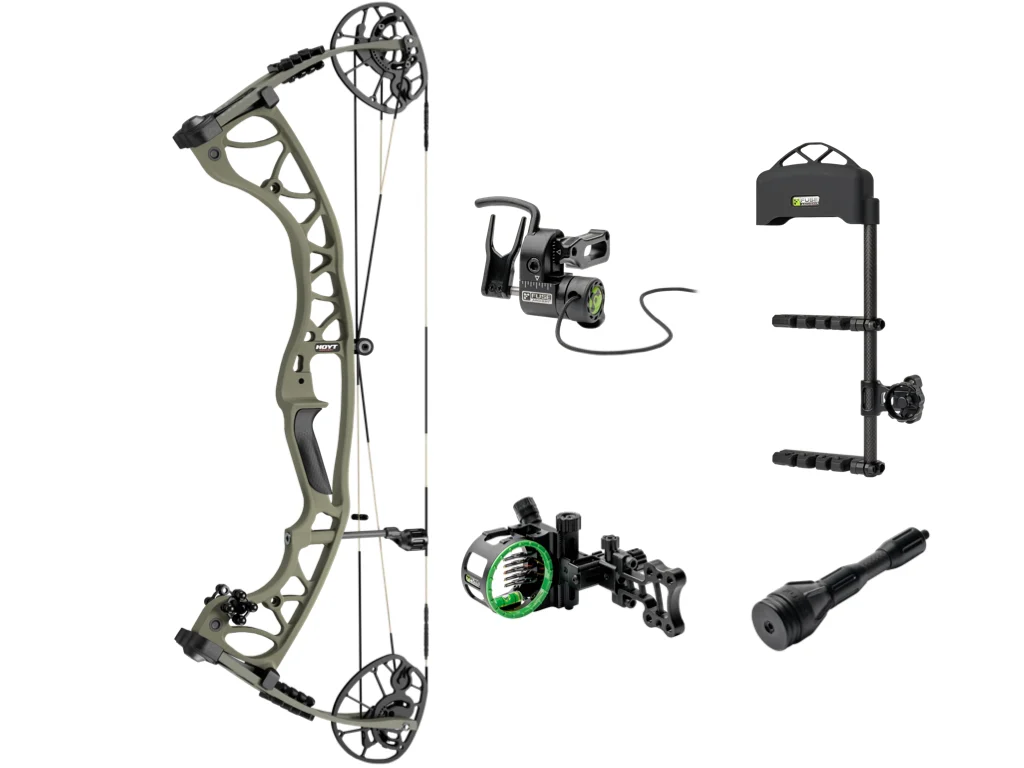
Browse our compound bows, including the Hoyt Torrex package for an entry-level option or the Hoyt Alpha X 33 if you are ready to step into a flagship. If you have questions about fit, draw length, or setup, reach out or stop in. We will get you on the right bow.


